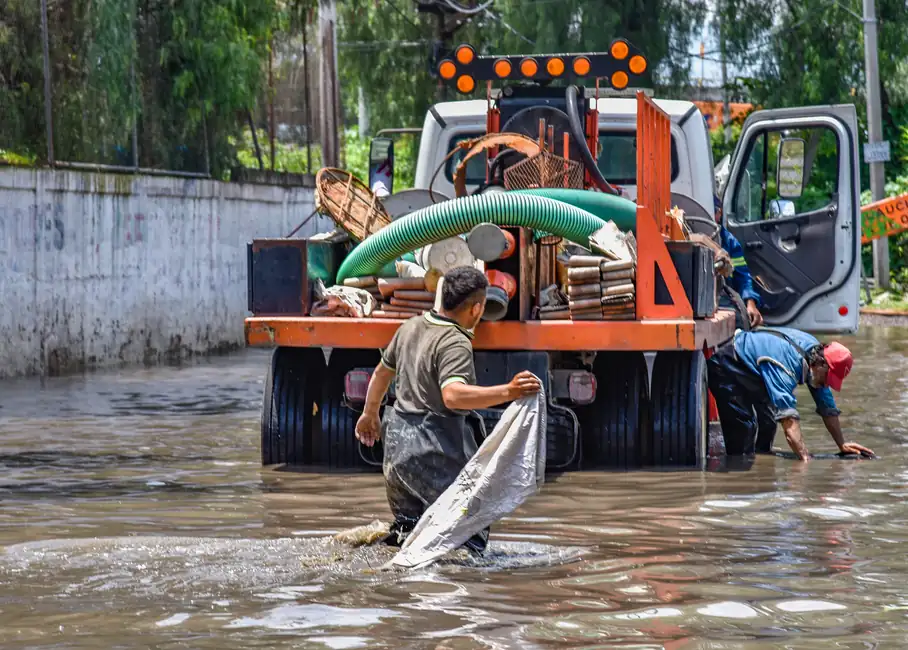
Water damage from a broken pipe can escalate quickly, leading to costly repairs and health hazards. Knowing how to handle water damage from a broken pipe in Rancho Cucamonga is crucial for homeowners. This guide will walk you through immediate actions, restoration processes, and when to seek professional help.
Water damage in the Inland Empire doesn't look like water damage anywhere else. The region packs three completely different flood mechanisms into one valley: mountains that shed debris flows onto the northern cities, former dairy land that won't drain in the south, and flood-control washes threading between them. Add housing stock that ranges from 1900s craftsman homes to subdivisions built last year, and every city floods for its own reasons. Here's the map.
The Foothill Cities: Alluvial Fans and Post-Fire Debris Flows
Rancho Cucamonga, Upland, Claremont — the northern tier sits on alluvial fans at the base of the San Gabriels. An alluvial fan is, by definition, the pile of everything the mountain has washed down for millennia; building on one means the mechanism is still active. Normal years, the flood-control basins catch what comes down. The exception is after wildfire: burned slopes shed water instead of absorbing it, and moderate storms produce mud- and rock-laden flows that overwhelm channels and end up in garages and living rooms. The elevated-risk window lasts roughly 2-5 years after a burn.
The Old Cores: Century-Old Plumbing in Ontario, Pomona & Claremont
The historic downtowns and college neighborhoods carry Southern California's oldest residential plumbing — galvanized supply lines that corrode shut and burst, cast iron drains at end of life, and clay sewer laterals that a century of tree roots have found. These homes generate the classic inside-out water damage: supply line failures that flood interiors, and sewage backups when root-choked laterals block. Different mechanism, different insurance treatment (generally covered, unlike outside flood), and different fix — the plumbing, not the drainage.
The Dairy Flats: Clay Soil and Shallow Groundwater
Eastvale, Chino, south Ontario — much of this area was dairy preserve until the 2000s building boom, and the land remembers. Clay-heavy soil drains slowly, so storm water ponds in yards and against foundations. Beneath it, historically shallow groundwater pushes moisture upward into concrete slabs. The result is a double pattern we see constantly: acute yard-and-garage flooding during storms, and chronic slab-moisture problems — damp flooring, musty rooms, mold at baseboards — that homeowners mistake for plumbing leaks. Newer construction doesn't exempt you; some of the worst slab-moisture calls come from homes under 15 years old.
The Washes: Corona, Norco and the Santa Ana River Corridor
Corona wraps around Temescal Wash, and Norco borders the Santa Ana River. Flood-control infrastructure handles routine storms, but properties near the washes sit in mapped flood zones for a reason — and Norco's horse properties add rural drainage, aging private infrastructure, and well/septic systems into the mix. If you're near a wash, know your flood zone designation (FEMA's map lookup is free) — it determines both your real risk and whether flood insurance is required or advisable.
The Hillsides: Chino Hills' Drainage Problem
Hillside construction in Chino Hills and Diamond Bar trades flat-land ponding for slope drainage: water moving downhill finds retaining walls, under-slab paths and side-yard swales. When hillside drains clog or grading fails, water enters homes laterally — often through walls rather than floors, which confuses homeowners and adjusters alike. Slab leaks are also disproportionately common in hillside homes, as slopes stress under-slab plumbing over time.
What This Means When Water's in Your House
Mechanism determines everything: the fix, the urgency, and the insurance bucket. Outside water (debris flow, ponding, wash overflow) is "flood" — separate policy territory. Inside water (burst pipes, slab leaks, sewage backup) is generally homeowners-policy territory. Either way the physical response is the same and the clock is the same: extraction and structural drying within 24-48 hours is what prevents a wet room from becoming a mold remediation project.
Frequently Asked Questions
What should I do immediately for water damage in Rancho Cucamonga?
Shut off the water supply, turn off electricity, and document the damage. Contact a professional for assistance.
How can I prevent further damage from a broken pipe in Rancho Cucamonga?
Shutting off the water supply and removing valuables from the affected area are crucial. Additionally, consider hiring professionals for immediate extraction and drying.
Who can help with water damage from a broken pipe in Rancho Cucamonga?
Socal Water Damage Pros specializes in handling water damage restoration and can provide the necessary services to mitigate further damage.
What are the signs of mold growth after water damage?
Look for discoloration, a musty smell, and visible mold on surfaces. Mold can develop quickly, so it's important to act fast.
How long does the water damage restoration process take?
The duration depends on the extent of the damage. Minor repairs can take a few days, while extensive damage may require weeks.
Get Help with Water Damage in Rancho Cucamonga
If you're facing water damage from a broken pipe, don't hesitate to reach out for help. Call Socal Water Damage Pros at (833) 844-0749 for immediate assistance and professional restoration services.